Interviews and voices
Conversations with figures such as Josiah Tell, whose posts on the site include “READ THE SUN” (May 4, 2009), “Modern Self Portraits” (May 13, 2009), and “Medieval Treasury” (April 14, 2009).
Category · Let’s Get Critical
Opinion pieces and critical analysis of art, economics, and museum practices — written for readers who like their cultural criticism argued rather than announced.

What this section covers
Suggested Donation keeps a running conversation about how exhibitions are made, funded, and talked about. The critical writing gathers in three recurring threads.
Conversations with figures such as Josiah Tell, whose posts on the site include “READ THE SUN” (May 4, 2009), “Modern Self Portraits” (May 13, 2009), and “Medieval Treasury” (April 14, 2009).
Critiques of how commerce shapes the museum visit — sponsorship, marketing language, and the advertising that sits alongside the art.
Analysis of art market trends and what they mean for institutions that collect, display, and explain objects to a public.

Reading the exhibition
Critical commentary on this site runs alongside the museum reviews, and the two often overlap. A show is described, then tested: what does the wall text assume, what does the hang leave out, and what does the visitor take away?
Earlier museum writing on Suggested Donation includes “Geometric Abstraction at the Newark Museum” (February 19, 2010), “Microscopy” on the exhibition at the Hunterian Museum (February 18, 2010), and “The Need for Reed” on the Indianapolis Museum of Art (November 23, 2009).
Opinion pieces here are the authors’ own readings. They are not statements issued by the institutions discussed.
The critical voice that runs through this site is one shaped by close looking and a willingness to ask uncomfortable questions about how art reaches the public. Museums and galleries are not neutral spaces; every exhibition arrives with a budget, a donor list, and a set of institutional priorities that shape what visitors see and what they do not. The interviews collected here press curators, artists, and archivists to reflect on those conditions, turning the conversation away from simple celebration and toward the structural realities behind the gallery wall. This is criticism that treats the financial and political context of an artwork as part of its meaning, not as an afterthought.
Archives and libraries hold more than documents; they contain the decisions about what was worth saving in the first place. Suggested Donation returns to these spaces repeatedly, asking how institutional choices about collection, preservation, and display determine which histories survive and which fade. The writing here treats the archive as a living argument rather than a static repository, one where the cataloger's hand and the donor's preference leave permanent traces. Whether examining a museum's acquisition records or the gaps in a photographic collection, the site's critical pieces remind readers that preservation is never innocent—it is always an act of selection.
Nightlife and edutainment
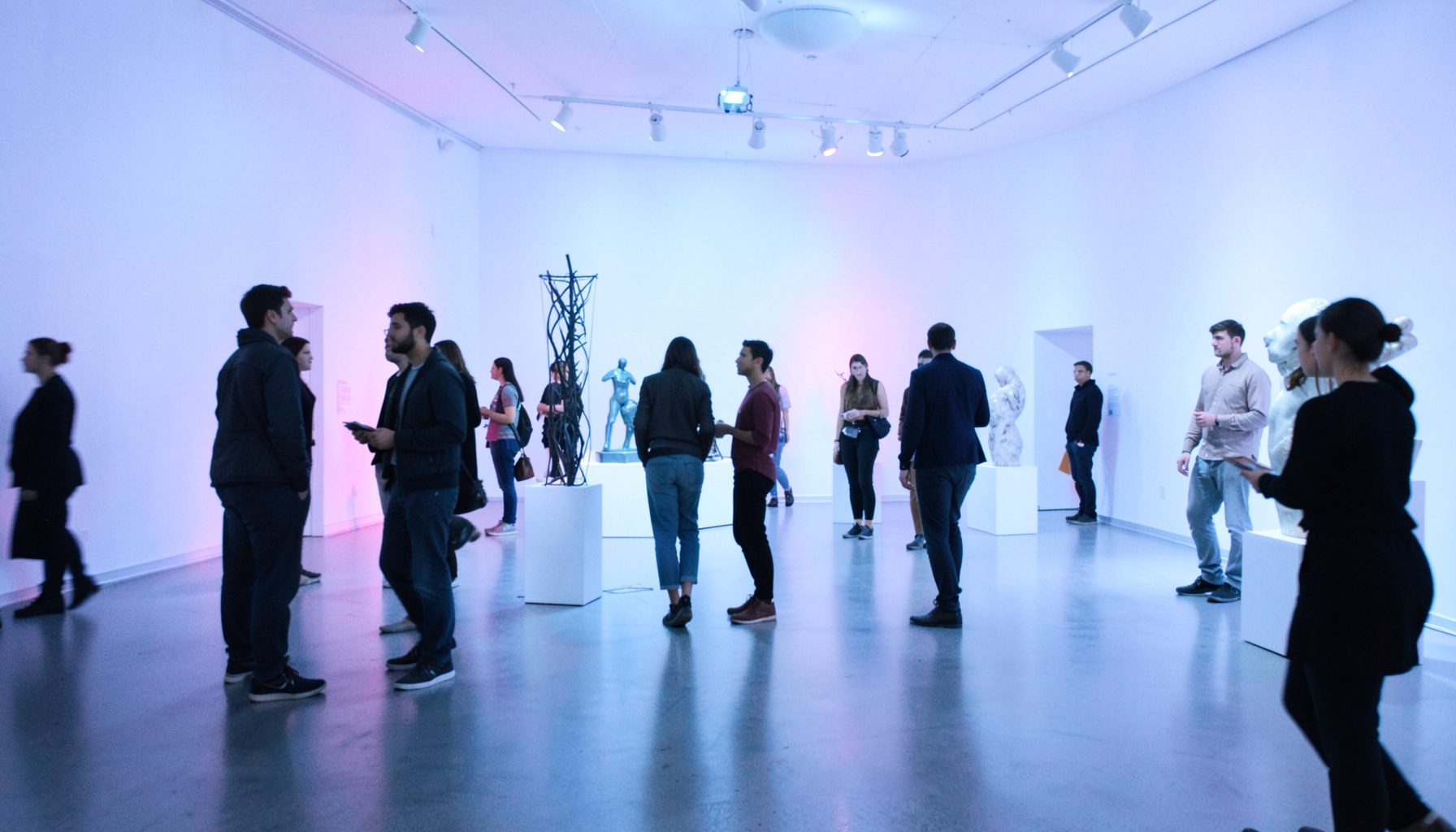
One strand of the critical writing looks at museum nightlife and edutainment — the late hours, the music, the crowd that arrives for the room rather than the collection. A post titled “baby sometimes hiro ballroom just ain’t enough” discussed those events, with dates on the site running from October 9, 2007, to January 22, 2009.
The question it keeps returning to is a plain one: does the party bring people closer to the work, or simply give them a different reason to be in the building?
Read the museum reviews for the exhibitions these arguments respond to.
Keep reading
The critical pieces sit beside the site’s other categories: exhibition reviews, archival and preservation writing, and web-based art and culture.
Reviews of exhibitions and events, including the Newark Museum and Hunterian Museum posts.
Starchivists writing on digital preservation, dialects, and the keeping of digital culture.
Have a show, a book, or an argument worth a second look? The contact form takes suggestions and donations.
Disagreements welcome. The contact form asks for your name, email, subject, and comment, with a subject line for suggestions and donations.