Notes from the galleries
Museums, libraries, and archives, looked at closely.
Suggested Donation is a blog of exhibition reviews, archival projects, and cultural criticism, written by Andy Van Slyke and Josiah Tell.


Hello, and welcome
Writing about the places that keep culture.
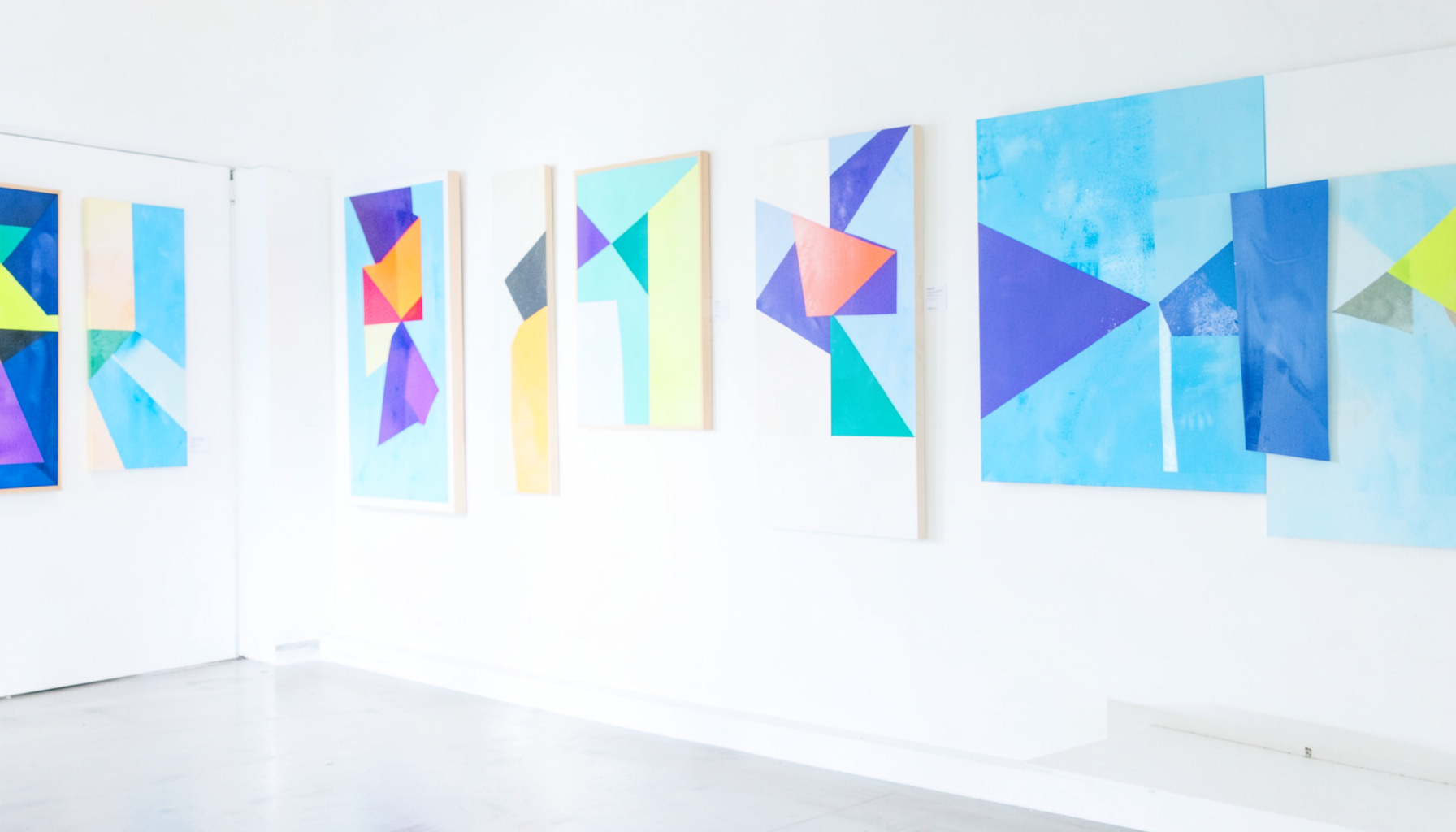
Posts here move between exhibition reviews, digital preservation, and the odd argument about advertising and economics in cultural institutions. Recent subjects include Geometric Abstraction at the Newark Museum, the Craft of Microscopy at the Hunterian Museum, and The International Dialects Of English Archive.
Categories run from Museums and Libraries to Starchivists, World Wide Web World, Let's Get Critical, Interspective, and Scandalmakers.
Get in touchA museum visit is rarely only about the objects on display. The rooms themselves shape what we notice: the height of a ceiling, the direction of the light, the distance between one case and the next. Writing about exhibitions means paying attention to those quiet decisions as much as to the works themselves. A gallery can make a small painting feel monumental or let a monumental sculpture disappear into the background. Looking closely, and then looking again, is the habit this blog tries to keep alive, whether the subject is a blockbuster show or a single overlooked corner of a permanent collection.
Archives are often imagined as silent places, but they are full of arguments waiting to be reopened. A folder of correspondence, a box of negatives, a ledger with a column left unexplained, all of these invite interpretation. The work of preservation is not simply keeping things safe from harm; it is also deciding what deserves to be kept, described, and made findable. Those decisions carry weight, and they change over time as institutions reconsider whose stories have been told and whose have been left out. Reading an archive closely means listening for those absences as well as the voices that fill the shelves.
Libraries occupy a strange position in cultural life, at once utterly familiar and quietly radical. They are among the few places where a person can spend an afternoon among books, images, and strangers without being asked to justify the visit. That openness is easy to take for granted, yet it shapes the character of a city in ways that are hard to measure. A reading room offers a different pace of attention than a screen does, and the physical arrangement of shelves can encourage accidental discovery. Writing about libraries means noticing how they hold knowledge and community in the same space.
Photography has always carried an air of evidence, even when it is doing something more complicated. A picture can document a place, but it also frames it, cropping out as much as it includes. Historical photographs of statues, streets, and gatherings tell us about the people who made and collected them as much as about their subjects. When such images move into digital collections, they become easier to find and easier to misread, detached from the albums and files that once gave them context. Thinking carefully about pictures means asking who took them, for whom, and what happened to them afterward.
Cultural criticism is sometimes treated as a matter of taste, but it is closer to a form of care. To criticize an exhibition or a preservation project is to take it seriously enough to describe what it does and how it does it. That kind of writing can be generous and still be sharp. It can notice the cleverness of a display and the fatigue of a visitor who has been standing too long. The best criticism leaves a reader with a sharper eye rather than a settled verdict, and it treats the institution as a place still being made rather than a finished monument.
Digital preservation has changed the rhythm of archival work in ways that are still unfolding. Scans and catalogues make collections reachable from anywhere, which is a genuine gift to researchers and curious visitors alike. At the same time, a digital file is not a stable thing; formats age, links break, and descriptions drift away from the objects they were meant to explain. Institutions now balance the care of physical materials with the care of their digital counterparts, and the two kinds of work ask for different skills and different patience. The question of what lasts, and for whom, sits underneath all of it.
The history of display is full of small experiments that rarely make the headlines. A case lit from below, a wall painted a particular shade, a label written in a warmer tone than its neighbors, these choices quietly steer how a visitor feels. Curators and designers often speak of rhythm and pause, of giving the eye somewhere to rest between dense passages of information. In older institutions, the traces of past arrangements survive in photographs and floor plans, offering a glimpse of how earlier audiences were expected to move and look. Reading those traces is a way of seeing the museum as a place with a memory of its own.
There is a particular pleasure in the odd corners of cultural institutions, the objects that resist easy categories and the rooms that visitors hurry past. A case of scientific instruments, a set of dialect recordings, a wall of geometric abstraction hung beside something entirely unrelated, these encounters keep collections from settling into predictability. They remind us that museums, libraries, and archives are assembled rather than inevitable, shaped by accidents, gifts, and stubborn interests. Paying attention to those idiosyncrasies is one way of staying curious, and curiosity is the thread that runs through everything written here, whether the subject is a grand exhibition or a single curious object.
“Unlike everybody else, we dislike advertisements.”
Josiah Tell, READ THE SUN, May 4, 2009
Selected posts
Where the writing has been
-
Geometric Abstraction at the Newark Museum Andy Van Slyke · February 19, 2010 · Museums
-
Microscopy Andy Van Slyke · February 18, 2010 · Hunterian Museum, London
-
The Need for Reed November 23, 2009 · Indianapolis Museum of Art
-
Modern Self Portraits Josiah Tell · May 13, 2009 · Featured
-
Medieval Treasury Josiah Tell · April 14, 2009 · Museums
Suggestions and donations
Have something worth writing about?
The contact form takes your name, email, subject, and comment. Use it for suggestions, donations, or a general note about a museum, library, or archive.